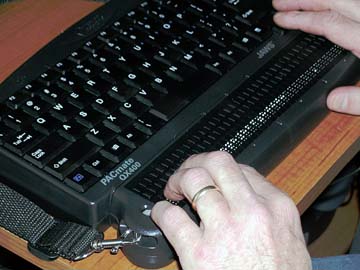
According to Access IT, assistive technology is used for students with disabilities which might not be able to perform the function without the technology. This technology is includes everything from wheelchairs to special keyboards on computers with brail for blind students. There is a lot of assistive technology out there for all different types of disabilities, but there is always more needed. The goal is to allow students with disabilities the same opportunity as every other child. Technology-Related Assistance for Individuals with Disabilities Act of 1988 stated that assistive technology is any technology or item which increases, maintains, and improves the capabilities of students with disabilities.
Autism has been a growing problem for children in America. Now 1 in every 200 students is diagnosed with some form of autism and researchers have little if any evidence where it came from and why our children are ending up with it. There has also been less than satisfactory research and attention on assistive technology for these students. There are a lot of different components of autistic disorder which prohibits students from learning like other students. These assistive technologies are use to try to help students with autism have a better understanding of their environment, acquire better communication and social skills, have better attention and focus. These technologies are used to help motivate, organize, and help with academic skills. The main goal for these assistive technologies is to help autistic students work into society and learn their own self help skills.
Autistic students respond far better to visual stimuli than any auditory or kinesthetic activity. Teachers are often recommended to give them visual schedules and instructions. One program which helps these students with this visual learning style is Boardmaker, a program created by Mayer-Johnson. There are over 3000 picture word communications with show pictures along with words or sentences. This is a great tool for autistic children because they are able to see and understand something in a visual way.
These technologies are always growing and changing in the education world. As a future educator it will be hard t keep up with all of them and if you think you can, you are crazy. However, if you do nothing and simply use what you were taught, you are not using all of your resources. These students need these assistive technologies so it is a teacher’s job to supply them with them. You can stay connected through the internet and all of the web resources, like blogs. Also taking a few classes would allow you to stay up to date and connected. All of the resources are out there so it is up to you to use them to your advantage.


I did mine on autism as well. It's amazing how they can use the pictures to help them communicate, and use social queues.
ReplyDeleteI have a few friends who have autistic children, but until I began my practicum this summer, I have not been around children with autism. One of the boys from the daycare where I do my practicum apparently does have mild autism. I have also worked with him outside the daycare because he was on my T-Ball team. He definitely behaves differently than the other children on the team, but when he knows exactly what to do, he seems to respond very well. One of the things you mentioned in your post is how autistic students do better with visual cues. I have found that to work well with this boy. I need to go speak with him directly and point and show him what the other players are doing and he will "get it" right away. Routines work well with him, too. He remembers sequences and will expect them time after time. When he comes back to the dugout after running "home," he has to have a "high five" to "complete" that task. Other kids will sometimes just walk past me or hand me their batting helmet, but this boy will not go into the dugout until he slaps my hand. He will wait with his hand out if I am distracted by another player. I think autism is pretty fascinating and I hope I can have the opportunity to learn more about it and help students who experience forms of it.
ReplyDeleteWhen I was looking up assistive technology for autistic students I also ran across Boardmaker. I also looked at Faceland which is a program that helps students become more familiar with recognizing facial expressions & emotions. I like that there are a variety of tools to use so the student can use ones that fit them the best and allow them to learn in the general education classroom.
ReplyDeleteI have not done alot of research of helping kids with autisum. I think that it is imorptant that teachers know something that can help autistic students. The one thing that is important t oremember is that autisum can not be cured and we have to do your best to helop them with their learning experience, not only at school but also at home.
ReplyDeleteWhat a great post. It's really interesting to read about the growing population of children with autism and how we can support them in the classroom with assistive technology. Boardmaker sounds like an interesting program that I will look into using in my future classroom. It was neat to read that children who are autistic generally learn better in a visual way and as teachers we need to be able to support their learning. Using our resources to support them, and all students, is an an important part of our job. Learning about and utilizing assistive technology can really help these learners
ReplyDeleteKathryn, I didn't really know of any assistive technologies for students with autism. Autism does seem to be complicated and the knowledge of it is limited, so maybe that is a reason for why there is not many A.T. for children with autism. The Boardmaker program sounds like it could be really useful for students with autism, was the last picture that you included in your post an example of that?
ReplyDelete